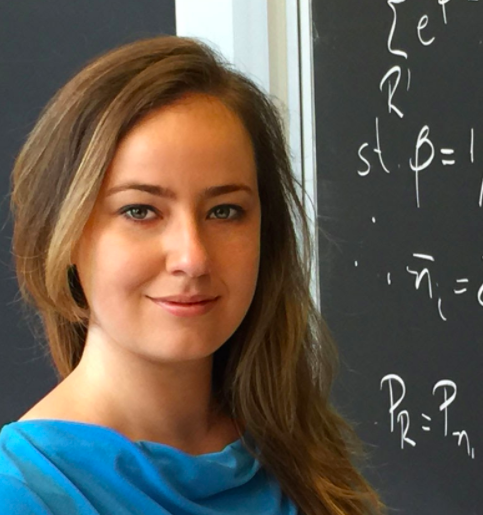
Angela Bassa, Senior Director of the Data Science and Analytics Center of Excellence, iRobot
About Angela
Angela Bassa, Senior Director of the Data Science and Analytics Center of Excellence, iRobot
👩🏻💻 Job: Our team’s core responsibility is to study the behavior of our robot fleet and our customers in order to delight them and enrich their relationship with our robots and products. This work is a combination of pure research as well as developing the tools and infrastructure that allow these analytics and scientific inquiries to be assessed quickly and accurately. The questions we ask run the gamut from “What is the reliability of our data collection platform?” to “When do our customers prefer to run their robots and why?”
🇺🇸 We live in the greater Boston area, in the Northeastern part of the US.
👶🏻 I have one son, who’s almost 3 years old. He learned to say the word “robot” before he learned the word “mama!”
Career
Importance of the team
What do you like most about your job?
There’s a lot to love about the work we’re doing–it’s intellectually stimulating and meaningful in real and visible ways.
Still, the thing I love most about it is the Data Science & Analytics team we’ve built together. This is a group of good people who are smart and who care about the work and each other.
I’ve had a varied career over the years, and I know how rare and special this is once you find it.
To know more about your work & this is something you like to ask during hiring interviews: Could you tell us more about the last project you worked on and what did you learn?
I’m in management, and I’ve not been an individual contributor in many years. I still need to keep abreast of the evolution in the space (from tools to methods), but I also need to ensure that I have all the necessary context to set the vision and strategy for the team. Hiring for data management professionals is different than hiring for analysts, scientists, stewards, or engineers. :)
I’ve been focused lately on making sure that we’re making the best use of the data we have in our platforms, and on optimising how we execute on our roadmaps.
Managing humans is hard
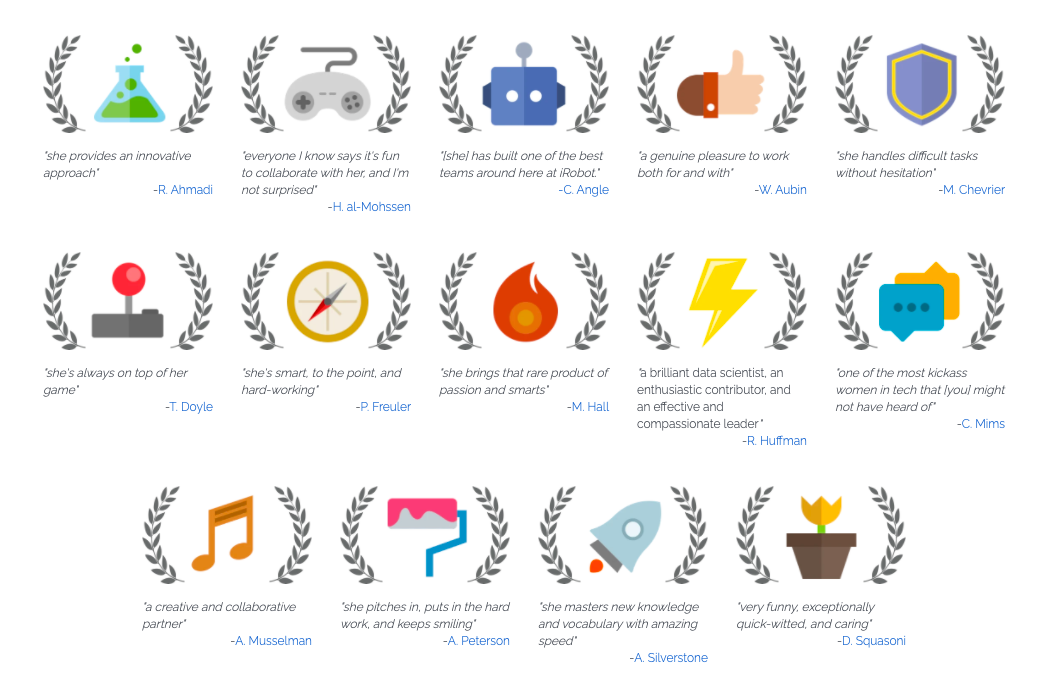
In the Harvard Business Review article, Managing a Data Science Team, you wrote about great managers. Coming from a mathematical background (hard skills), what was your path to becoming the best manager (soft skills) you can be (see the Wall of Fame) and always be “on top of [your] game” (T. Doyle). What is the most rewarding thing about being a manager?
Being good at managing humans is so hard, because humans are hard. It’s taken me learning about varied topics about humans (psychology, sociology, pedagogy), and business and life.
I’ve learned some great management lessons in works of fiction because those are really great life lessons. I think I said something like this in the HBR article, but these are smart and observant people you’re trying to recruit and lead, and they’ll smell “anything fishy” from a mile away.
I’m not a big fan of the “soft-hard” skill dichotomy; many so-called soft skills are actually quite difficult to learn and hone, while many quantitative concepts are more intuitive once they’re framed within a discipline. For instance, there’s not much that is soft in conflict management and resolution, and I’d venture that all disciplines are hard when we define them as areas worthy of further study
The role of mistakes
There’s a quote in your blog that says “An expert is a person who has made all the mistakes that can be made in a very narrow field”, I like this idea to endure failure to make progress, do you think you’ve made all the mistakes in your career yet? :)
I have most certainly not made all the mistakes I’m going to make. I have made all the possible mistakes in some very very very niche fields, though even here I am constantly reminded of additional ways in which I can make mistakes while attempting to bake the perfect baguette.
I have made many mistakes as an analyst, and I think it makes me a more resilient strategist and a more empathetic manager.
Career & Parenting
Pregnant working mom
I gave this interview when I was pregnant, and the lack of sleep those first several weeks was so difficult to deal with!
In the Keep it simple video, you are not alone! How did you live pregnancy, as a worker, as a speaker?
It was so weird! For me, the whole process of being pregnant was bizarre.
There’s a reason I went into numbers and computers and robots, and I never felt more “mammalian” and “organic” than during these months.
Haha! I love my son and I have this incredible connection with him, and while I know it was not “on purpose,” being kicked from the inside while trying to think is just not easy!
Impact of motherhood on career
We can see you in many events speaking publicly, you’re also an author, a manager, and probably way more! How do you organise with a kid adding up to all of this?
The answer is that I have a lot of help. My husband is very supportive; even though it often feels like I do more than half of the work, I’m sure that’s how he often feels too. There’s just a lot that needs to get done!
I’m also a very organized person, and that natural propensity towards fighting entropy wherever possible also helps.
In this talk at the CSVConf, you say that controlling numbers/code is impossibly difficult but what you really like is “programming people” to do those things (“bringing people as a team who can produce a whole that is bigger than the sum of the parts”), have you thought about education in this way?
To clarify, I think controlling code is impossibly difficult and that managing people is even harder :) That’s part of why I like it so much.
My mom is an educator, and we’ve talked about this a lot. There’s so much rich thinking from educators around motivating students, information communication and retention, developing critical thinking, etc.
Has motherhood impacted your career in any way: Have you made choices that you would not have done not being a mom?
I’m sure it has impacted my career, because it changed a lot about my priorities and my values. How I make myself available now, and to which activities, is a very different calculus. I also now have this person who is vulnerable and depends on our attention and love to grow up healthy and happy who literally did not exist a few years ago. Whether that’s been a positive or a negative depends on how you frame things.
I believe I am more tired than I used to be, because I’m doing more–but I’m happy and more fulfilled doing more too.
You are managing a team, has becoming a parent changed in some ways how you manage people?
In many important ways. Seeing a human learn things has given me a different appreciation for how newcomers to a team (or a concept) learn.
It’s been incredible to watch my son’s evolution, and it’s given me a lot of valuable insight. For instance, seeing which parts of my son’s personality seem to have been there from the start, versus other parts that he’s still playing with. That gives me an appreciation for how people I interact with everyday behave as well.
When your son gets older, which skills would you advise him to develop to pursue his journey through life?
I hope I can teach him to love to learn.
Being a mom & the lack of institutional support
From what you experience, what is the most challenging thing about being a mom?
The lack of institutional support. Not that I can complain, I am in a very privileged position to have an employer that offers paid parental leave among other benefits, and to reside in the great Commonwealth of Massachusetts, which provides many other legal protections as well. But the fact that so many of my friends and fellow mothers depend on the “good will” of their partners or managers should feel like a much bigger embarrassment to our society than it evidently does. The data from the impact of the pandemic also lays this clear. Women have taken the brunt of the “unseen” labor of caring for the sick, elder care and childcare, and have been “forced” to choose to exit the labor market. I’m so fortunate to not feel that pressure, and my case should not be such an exception.
Life with robots
Some of iRobot’s products, Root® robots, are dedicated to education. Are you considering using it with Jack? What do you think about it?
We do! He’s still too young to take full advantage of all the capabilities, but he loves the robots and getting to play with them. He likes to play with the Root app and to make the robot play musical notes when it bumps into things. Like, Jack is obsessed with robots! And we have so many always on running around the house (because of the development units we have, and also because I want to make sure that I’m seeing what our customers are experiencing).
How far do you think we can go with robots teaching/educating/raising kids? I was a bit refractory to this idea, but one day I read that mortality used to be high in orphans as babies had affective deficiency due to a lack of physical contact and I thought that maybe we could save lives with robots doing this task that nobody would do.
This is such a great question! I get your concern, but the way I think about it is from the other side. If there are kids who would not have any education or any help but for automation than our job is to figure out how to do it in a way that minimizes the preventable harms from doing things badly. I was born and raised in Brazil, and I’ve seen how much more accessible so many things are when they are automated well. The team at Our World in Data does an amazing job making this point. But it’s definitely not without risks, and I’d much rather ensure that we mitigate those thoughtfully than to ensure (by not championing greater automation) that only the few continue to have access to novel discoveries (or even older ones that were previously too cumbersome to make broadly available).
Last words
Having a child is something I always wanted, and for a long time it didn’t look like it was going to happen for us. It was so challenging, both mentally and physically. And I’m really glad that it’s proving to be everything we had hoped for and more.
Do you have any “techy” content you would like to share to have readers know more about your job?
So many!! Brandon Rohrer, who’s also at iRobot, has an amazing set of ML courses he does independently. There’s also the Data Helpers community, if folks are looking for help getting into the profession or other many topics. Given the pandemic (and techy parents who might read this),
DYK @iRobotEducation has a robust #STEM outreach program? Everything from virtual museum tours to college panels, job shadows and other classroom activities. You can request an experience 👉 https://t.co/L0uNMHLDl7
— Angela Bassa (@AngeBassa) February 10, 2021
Feel free to share with other educators. 🧑🏫
Many of these are virtual! There's also an online learning library and companion coding app https://t.co/djH8N9mPE3 https://t.co/EFWi11ra5H
— Angela Bassa (@AngeBassa) February 10, 2021
are also relevant.